A 4-week home workout plan for beginners
Three strength workouts and two walks a week. The load grows gradually, so that after a month you do more than on day one and don't quit in week two.

Contents
How the week worksWorkouts A and BHow the load grows week by weekIf you miss a workoutHow to tell the load is rightWhat to do after four weeksOne of the most common reasons to quit training is a first week that's too hard. This plan starts small and adds a little at a time. The goal of the first month is the habit and the technique. Records can wait.
All you need: a mat, a timer and, from week three, a resistance band if you like.
How the week works
| Day | What we do | Time |
|---|---|---|
| Monday | Strength workout A | 15-25 minutes |
| Tuesday | Brisk walk | 30-40 minutes |
| Wednesday | Strength workout B | 15-25 minutes |
| Thursday | Rest or light stretching | 10 minutes |
| Friday | Strength workout A | 15-25 minutes |
| Saturday | Brisk walk | 30-40 minutes |
| Sunday | Rest | - |
The following week, workouts A and B swap places: B on Monday and Friday, A on Wednesday. You can move the days around; the only rule is at least one day without strength work between strength workouts.
The WHO recommends that adults get 150-300 minutes of moderate activity a week and do muscle-strengthening exercises for the major muscle groups on at least 2 days a week. Three strength workouts cover the second part. The two walks give 60-80 minutes, so top up to 150 minutes with walking on the other days: running errands on foot, taking the stairs, a 20-30 minute walk after work.
Workouts A and B
Before each workout, warm up for 4-5 minutes: marching in place, arm circles, easy squats, cat-cow. The warm-up sequence is in the article on the 20-minute no-equipment workout.
Workout A
- Squats (or box squats to a chair)
- Knee push-ups or table push-ups
- Glute bridge
- Forearm plank
Workout B
- Reverse lunges holding a wall
- Superman lying on your stomach
- Single-leg glute bridge (or a regular one)
- Kneeling side plank, each side in turn
The exercises are done as a circuit: each for a set time, rest between exercises, 1 minute of rest after the round. With the warm-up, a workout takes 15 minutes in week one and up to 25 minutes in week four.
How the load grows week by week
| Week | Work / rest | Rounds | What we add |
|---|---|---|---|
| 1 | 30 s / 30 s | 2 | learning technique, easier variations |
| 2 | 30 s / 30 s | 3 | a third round |
| 3 | 40 s / 20 s | 3 | more time under load, you can add a band to bridges and squats |
| 4 | 40 s / 20 s | 3-4 | harder variations: full push-ups, lunges without support, a fourth round if you feel good |
Only one or two things change each week. If a week felt hard, repeat it before moving on. Our guide to resistance bands helps you pick a band for week three.
After each workout write down one line: the date, how many rounds, which exercise variations, how you felt from 1 to 10. After four weeks you'll see how much you've gained, even if the mirror doesn't show it yet.
If you miss a workout
- Missed one day. Do the workout the next day and carry on with the plan.
- Missed a week. Repeat the last week you fully completed.
- No time for a full workout. Do the warm-up and one round. Even 10 minutes is better than nothing and keeps the habit going.
How to tell the load is right
The last 10 seconds of each exercise should be hard, but without losing technique. If you can chat without getting out of breath and aren't tired by the end, it's time to make it harder. If your technique breaks down halfway through, take the easier variation.
Mild muscle soreness a day after a workout is normal in the first weeks. Sharp joint pain, or pain that doesn't go away in 3-4 days, is a reason to stop and see a doctor.
What to do after four weeks
After a month you'll have the technique of the basic exercises and the habit of training 3 times a week. From there you can:
- Keep the same structure with harder exercises: Bulgarian split squats, paused push-ups, banded single-leg bridges.
- Add dumbbells or kettlebells and switch to sets of 8-12 reps.
- Set a walking goal: for example, 8-10 thousand steps a day.
And don't forget two things that stall progress when they're missing: enough protein and decent sleep.
This article is general in nature and is not medical advice. If you have a chronic condition, an injury, are pregnant or feel pain during exercise, discuss the load with a doctor first. Learn more
Sources
- Physical activity: recommendations for adults — WHO: 150-300 minutes of moderate activity and strength training on 2+ days a week
- Adult Activity: An Overview — CDC: the same recommendations, strength work for all major muscles
Read also
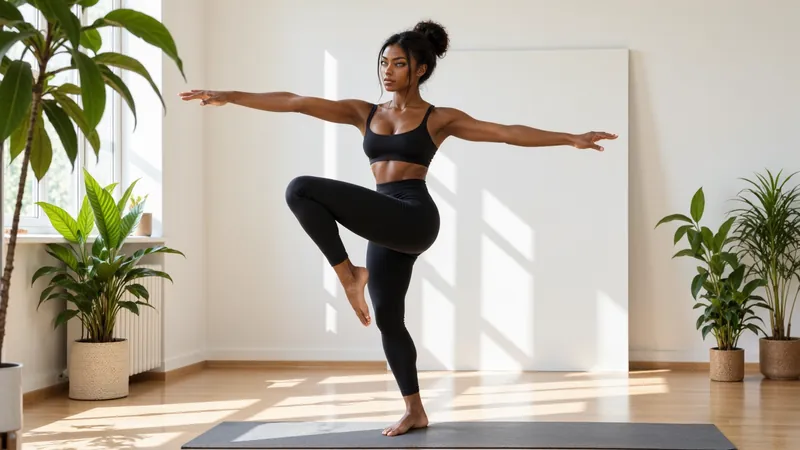
20-minute no-equipment home workout: a full-body circuit
Six exercises, a mat and a timer. The circuit suits beginners, takes 20 minutes including the warm-up and works your legs, glutes, back, chest and core.
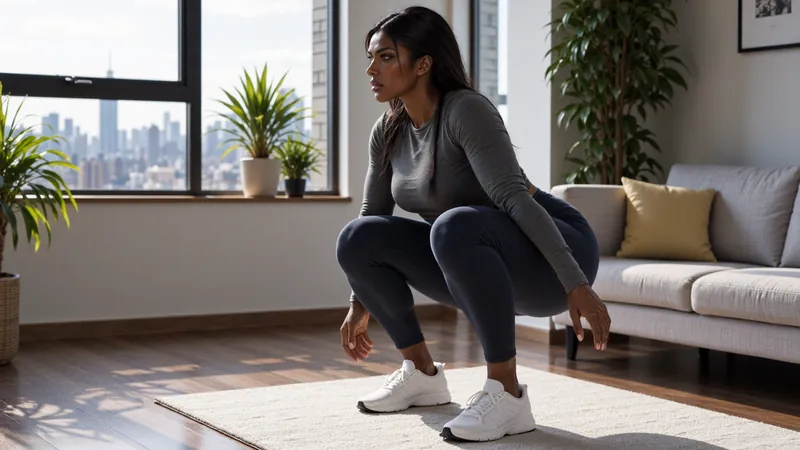
Squats without mistakes: knees, back and depth
Where to put your feet, where your knees should point, whether they can go past your toes and how deep to sit. A step-by-step guide to the bodyweight squat.

How much protein you need a day if you work out at home
We work out your protein target per kilogram of body weight, split it across meals and build a day from ordinary food, no protein shakes required.