20-minute no-equipment home workout: a full-body circuit
Six exercises, a mat and a timer. The circuit suits beginners, takes 20 minutes including the warm-up and works your legs, glutes, back, chest and core.
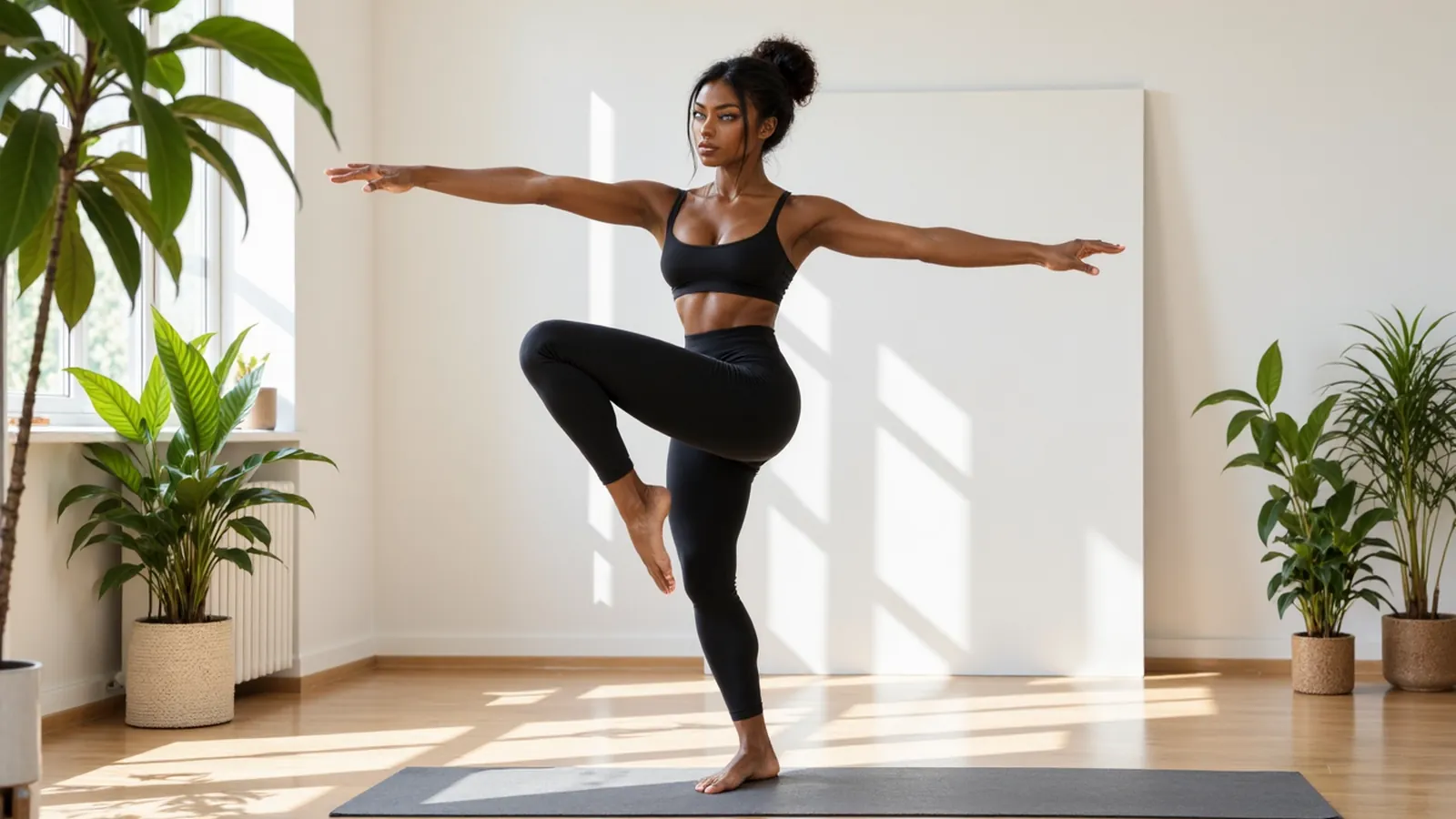
Contents
What you needWarm-up: 4 minutesMain part: 2 rounds of 6 exercisesCool-down: 2 minutesHow often and how to progressCommon mistakesYou don't need dumbbells for a strength workout at home. Your own body weight is enough while you're learning technique and can do fewer than 15-20 clean reps. This circuit is built so that all major muscles work in 20 minutes: legs, glutes, back, chest, shoulders and core.
The WHO advises adults to do muscle-strengthening exercises for the major muscle groups on at least 2 days a week. Repeat this workout 2-3 times a week and the strength part of the recommendation is covered.
What you need
- A mat or rug your feet don't slip on.
- A phone timer with 40/20 intervals. Any "interval timer" app or a timer video will do.
- About 2 by 2 metres of free space.
- Trainers are optional. Barefoot is fine if the floor isn't slippery.
Warm-up: 4 minutes
The warm-up gets your joints and muscles ready for squats and jumps. Do each movement for 30 seconds without breaks:
- Marching in place with high knees.
- Arm circles forwards and backwards.
- Side bends.
- Easy half squats.
- Slow alternating reverse lunges.
- Cat-cow on all fours: arching and rounding the back.
- Jumping jacks or side steps with arms overhead.
- Hip and ankle circles.
Main part: 2 rounds of 6 exercises
Do each exercise for 40 seconds, then rest 20 seconds and move on to the next. After the sixth exercise, rest 1 minute and start the second round. Two rounds with rest take about 13 minutes, the whole workout with warm-up and cool-down about 19 minutes.
| Exercise | What it works | Easier option |
|---|---|---|
| Squats | thighs, glutes | box squat: touch the chair seat and stand up |
| Push-ups | chest, shoulders, triceps | on your knees or against the edge of a table |
| Glute bridge | glutes, hamstrings | smaller range, 1-second pause at the top |
| Reverse lunges | thighs, glutes, balance | hold a wall with one hand |
| Superman, lying on your stomach | back muscles | lift one arm and the opposite leg in turn |
| Forearm plank | core | plank on your knees |
How to do them right
Squats. Feet shoulder-width apart or slightly wider, toes turned out a little. Lower yourself as if sitting on a chair behind you. Knees go the same way as your toes, heels stay on the floor. We cover the technique in detail in the article on squats without mistakes.
Push-ups. Hands slightly wider than your shoulders, body in one line from heels to the top of your head. Elbows go back at about 45 degrees to your body; don't flare them straight out.
Glute bridge. Lie on your back, feet on the floor close to your hips. Lift your hips using your glutes without arching your lower back. At the top your body forms a straight line from shoulders to knees.
Reverse lunges. Step one leg back and lower until both knees are bent at roughly a right angle. Keep your torso upright. Alternate legs.
Superman. Lying on your stomach, lift your straight arms and legs a few centimetres at the same time. Hold for 2 seconds and lower. Eyes on the floor, don't crank your neck back.
Plank. Elbows under your shoulders, stomach and glutes tight. If your lower back sags, drop to your knees: a straight plank on your knees is more useful than a sagging one on your toes.
Cool-down: 2 minutes
Breathe calmly and stretch for 30 seconds each: standing quad stretch, seated hamstring stretch, child's pose, chest stretch against a wall. Stretching after a workout helps you calm down and bring your breathing back to normal.
How often and how to progress
Do the workout 2-3 times a week, with at least one rest day between sessions. On days without strength work, ordinary walking is useful: the CDC advises getting 150 minutes of moderate activity a week, and a brisk walk counts.
When both rounds feel easy, change one thing at a time:
- Add a third round.
- Increase work to 45 seconds and cut rest to 15.
- Slow the lowering phase of squats and push-ups to 3 seconds.
- Swap in harder versions: full push-ups, Bulgarian split squats with your back foot on the sofa, single-leg bridges.
If you want more load without buying dumbbells, the cheapest option is a resistance band. How to choose one and what to do with it is covered in the article on bands.
Stop if you feel sharp joint pain, dizziness or severe breathlessness. Fatigue and burning in the muscles are normal. Pain in your knee or lower back is a signal to stop the exercise.
Common mistakes
- Skipping the warm-up. Jumping and squatting "cold" feels bad, and it's easier to overload your knees.
- Racing for speed. 40 seconds isn't a rep-count contest. Ten clean squats beat twenty with caving knees.
- The same thing every day to exhaustion. Muscles need rest between strength sessions. Without it fatigue builds up and progress stalls.
- Holding your breath. Breathe out on the effort: standing up from a squat, pushing up from the floor.
This article is general in nature and is not medical advice. If you have a chronic condition, an injury, are pregnant or feel pain during exercise, discuss the load with a doctor first. Learn more
Sources
- Physical activity: recommendations for adults — WHO: muscle-strengthening activity for the major muscle groups on 2+ days a week
- Adult Activity: An Overview — CDC: 150 minutes of moderate activity and 2 days of strength training a week
Read also
Resistance bands: which to choose and 6 exercises for glutes and legs
Fabric, latex, loops and flat bands: how they differ, what resistance a beginner should get and what to do with a band at home.
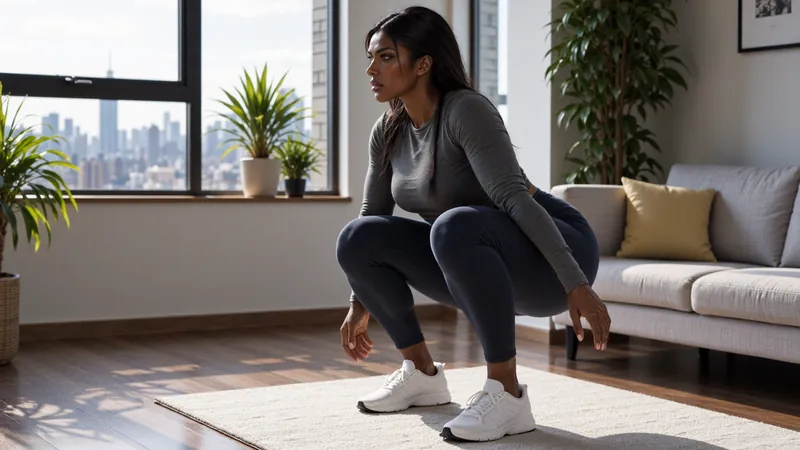
Squats without mistakes: knees, back and depth
Where to put your feet, where your knees should point, whether they can go past your toes and how deep to sit. A step-by-step guide to the bodyweight squat.

How much protein you need a day if you work out at home
We work out your protein target per kilogram of body weight, split it across meals and build a day from ordinary food, no protein shakes required.