How much water to drink when training
NHS fluid guidelines for the day, how much comes from food and how to check you're drinking enough. Plus drinking before and after a home workout and why eight glasses isn't the rule.
Contents
Daily guide: all fluid, not just the bottleHow much water is already in your foodHow to tell if you are drinking too littleThe eight-glass mythHow much to drink before, during and after trainingBuild your day without a chart on the fridgeMost people need 6-8 glasses or mugs of fluid a day according to NHS advice. Water, milk and lower-sugar drinks, including tea and coffee, all count. This is a guide: you need more in hot weather, when ill, during pregnancy, while breastfeeding or with long activity.
A 20- to 40-minute home workout on a mat in a normal room rarely calls for an extra litre just because of exercise. Add more when it is hot, you sweat heavily or the session is long and intense. If the advice feels complicated, it is not for you. Pale urine and a glass near your mat already work well.
Daily guide: all fluid, not just the bottle
The usual mix-up is counting only drinks versus total water intake. Keep it simple.
| Guide | What counts | Amount |
|---|---|---|
| NHS | all fluids, not just plain water | 6-8 glasses |
| Harvard Health | plain water for many healthy adults | 4-6 glasses |
| "8 glasses" slogan | often plain water only | handy phrase, not a rule |
The 4-6 glasses from Harvard Health usually refer to plain water. The 6-8 from NHS cover all fluids: water, tea, coffee and milk. Reviews on water and hydration show roughly 20% of water comes from food. If your plate is full of vegetables and fruit, that share rises.
Needs increase in heat and during physical activity. A short session without heavy sweating rarely needs extra on its own. Pregnancy and breastfeeding usually require more fluid. These are general pointers, not a personal plan or medical advice.
A household glass holds 200-250 ml. No need for millilitre tracking in an app. Count glasses, tea and soup for two or three days. The picture of your day sticks faster than any table.
How much water is already in your food
Everyday meals bring plenty of moisture.
- Vegetables, fruit and berries as snacks
- Soup, broth or sauce with your meal
- Yoghurt, kefir or cottage cheese
- Porridge made with milk or water
- Cucumber, tomato or salad at lunch
A day with soup, salad and fruit already covers a good share. A day of crackers and dry chicken without sides means you will need to top up with glasses. No need to weigh the cucumber. Look at the whole plate.
Protein for training is tracked separately; it is not a replacement for water. Portion guide: how much protein a day when training at home.
Tea and coffee count toward daily fluid. NHS includes them in the 6-8 glasses. No need to "offset" a coffee with double water. Alcohol is not a hydration choice. Sugary fizzy drinks as your main drink are a poor anchor: water, tea and kefir work better.
How to tell if you are drinking too little
Thirst is a useful signal. Do not wait until you feel dizzy, but do not force fluid "just in case".
NHS lists common signs of low fluid:
- thirst
- dark yellow urine with strong smell
- dry mouth, lips or tongue
- tiredness or dizziness
- urinating less often than usual
Check your day is on track:
- Watch urine colour through the day. Pale yellow, almost straw-coloured, usually means enough. If it looks like strong tea by lunchtime, you need more.
- Fewer toilet trips than usual: drink earlier instead of saving it all for evening.
- After training notice your mouth and head. Dry mouth, tight temples or foggy thinking: reach for water first, not a second coffee in one go.
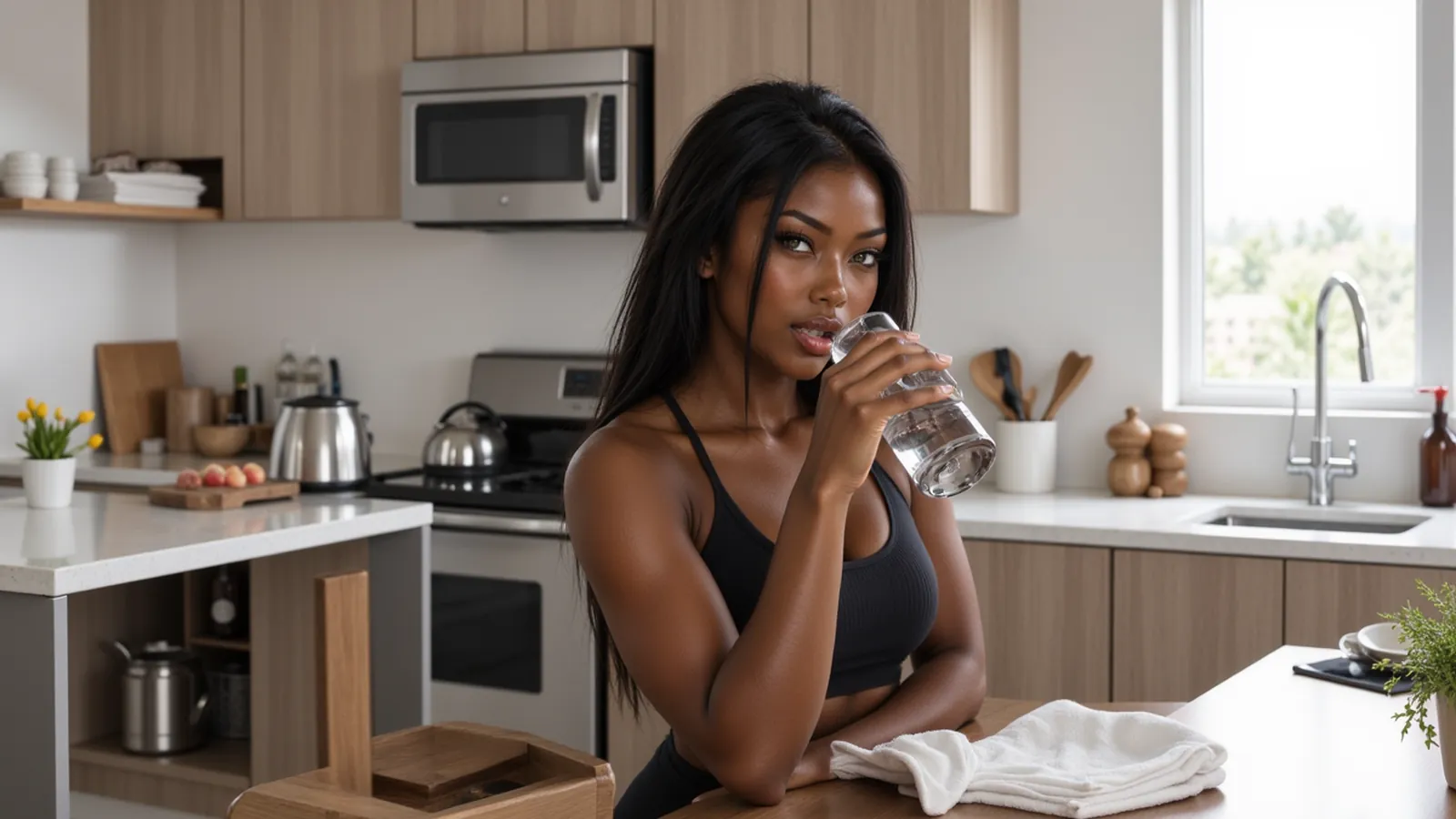
Put a 0.5 l bottle on your mat before you start. On a short home session this is often enough alongside water from food.
The eight-glass myth
"Drink eight glasses of water" is a handy phrase, not a law of physiology. Eight 250 ml glasses already add up to about 2 litres of drinks alone. For many people that exceeds the 4-6 glasses of plain water mentioned by Harvard Health, plus moisture from food. It is not a target or proof of a good day.
NHS talks about 6-8 glasses of fluid, and water, tea, coffee and milk all count.
Harvard Health notes there is no single answer. Many healthy adults do fine with 4-6 glasses of plain water; the rest comes from food and other drinks. Heat, sweat, age, medication and how you feel all change the amount. Pale urine and no thirst by evening matter more than ticking off an eighth glass.
If conflicting advice has worn you out and you drop the habit when it gets tricky, drop the quota. Keep a bottle in sight and check urine colour. That is enough to avoid giving up on day three.
How much to drink before, during and after training
A typical home session is a 20-minute bodyweight circuit, squats or resistance-band work. You will sweat. It is not a long run in the heat. Drink around the session according to how you feel.
Before
- Do not step on the mat with a dry mouth. If you have not drunk since morning, have a glass 20-40 minutes before.
- Leave an open bottle or glass where you can see it. A closed bottle in the cupboard does nothing.
- Ventilate a hot room beforehand. Less extra sweat means less unnecessary topping up.
During
- Drink if you feel thirsty. A sip between sets is normal.
- Avoid a litre break in the middle of a short circuit. A sloshing stomach ruins form and knees and back suffer when all you can think about is water.
- If the session lasts over an hour in a stuffy room and your clothes are soaked: drink more often, in small amounts.
After
- One or two glasses according to thirst. If your top is wet, one sip is not enough.
- A normal meal after a strength session replaces both water and salt better than three litres of water on an empty stomach.
- Check urine colour again one or two hours later. That shows whether you caught up.
Signs you are doing it right:
- you are not battling thirst during a short session
- no heavy stomach from water
- urine is not dark one or two hours later
Common mistakes:
- drinking nothing all day then a litre in five minutes after squats
- sugary fizzy drinks "for training"
- treating a 20-minute home session like long hot-weather endurance work
Stop if you feel sick, bloated or a ring suddenly feels tight after a large volume of water. If a doctor has already limited your fluid, this article does not override that advice.
Do not force fluid "for results". A very large amount of water in a short time, especially if you have not sweated much, can be harmful. If you feel dizzy, sick or confused after drinking litres, stop and seek medical help.
If a doctor has restricted fluid because of heart, kidney or another condition, do not increase intake based on this article. Follow the advice given in person.
Build your day without a chart on the fridge
You do not need a timer every 15 minutes. You need a rhythm you can repeat even on a lazy day.
- Morning: one glass of water. No need for a litre on an empty stomach.
- With every meal: a mug of tea, water or kefir.
- Training: 0.5 l bottle on the mat, finish what is left afterwards according to thirst.
- Through the afternoon: a few more glasses if urine darkens or the flat feels stuffy.
- Stop topping up one or two hours before bed. Night-time trips harm sleep and recovery after training.
Count glasses plus soup for two or three days. Remember the picture. After that, live without tracking.
Hot day or two sessions: add a glass or two. Do not double the amount "just in case". Water is part of an ordinary day, not a discipline or an eight-glass test. NHS guide: 6-8 glasses of fluid plus moisture from food. Check: thirst and urine colour.
This article is general in nature and is not medical advice. If you have a chronic condition, an injury, are pregnant or feel pain during exercise, discuss the load with a doctor first. Learn more
Sources
- Water, drinks and your health — 6-8 glasses of fluid a day, tea and coffee count
- Dehydration — Signs of low fluid: thirst, dark urine, infrequent urination
- How much water should you drink? — The eight-glass rule has no strict scientific basis
- Water, hydration, and health — About 20% of water comes from food, hydration and wellbeing
Read also
Fibre: how much you need daily and where to get it without supplements
Get a clear target of around 30 g of fibre a day and a list of foods that deliver it without powders. Plus a simple two-week ramp-up plan and the water rule that keeps your stomach happy.

How much protein you need a day if you work out at home
We work out your protein target per kilogram of body weight, split it across meals and build a day from ordinary food, no protein shakes required.
Stretching After Your Workout: 8 Exercises in 8 Minutes
Get 8 calm poses for 8 minutes right after your home workout. Plus how static stretching differs from dynamic, what not to expect from it, and how to avoid hurting your knees and back.